Strategy › Match play & the Crawford rule
Match play and the Crawford rule
Serious backgammon is played as a match to a set number of points, not for money a game at a time. The score changes everything: the same position can be a clear double at one score and a blunder to double at another. Here is how match play really works.
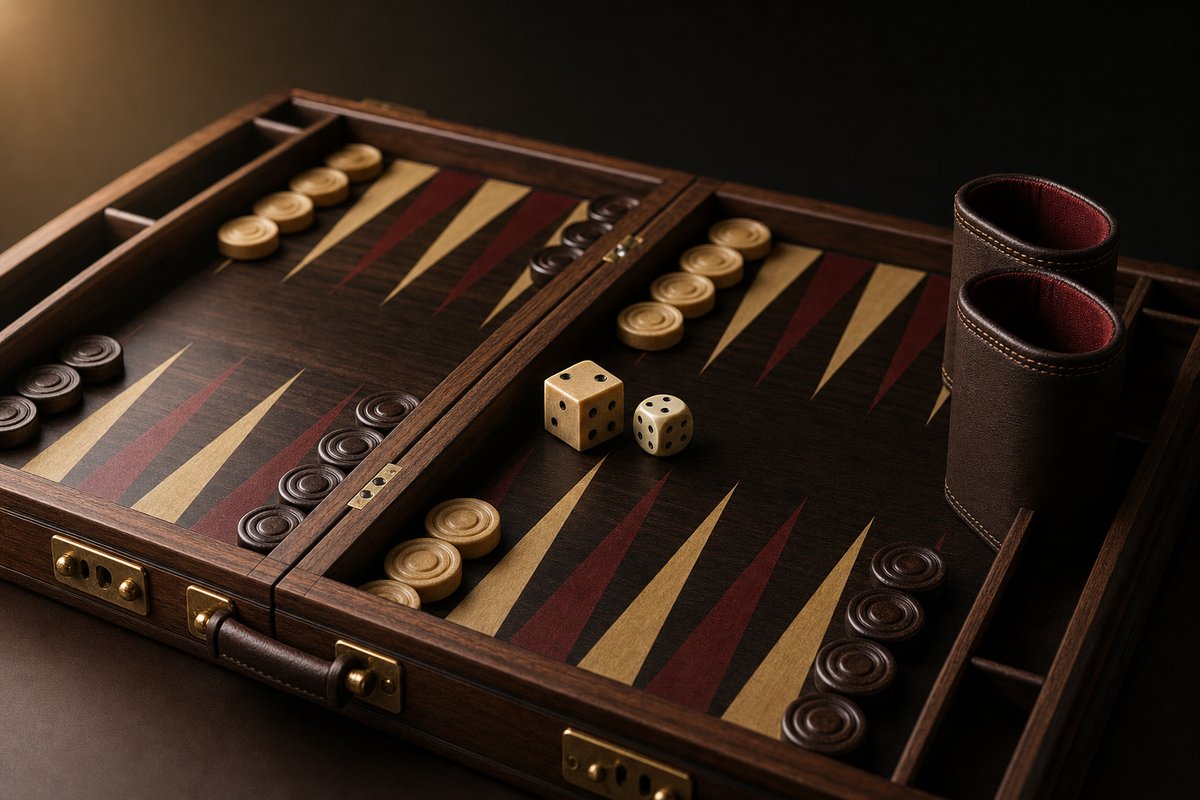
A match is the first to a target — five, seven, eleven points or more, with the doubling cube and gammons adding to the score each game. The crucial difference from money play is that points are not all worth the same. When you are one point from victory, another point does nothing; when the match is level and close, a single point can be decisive. Strong match play is the art of reading that.
Match equity and the score
Your match equity is your chance of winning the whole match from the current score — and it is what every cube decision really turns on, not the value of the game in front of you. A double that looks routine for money can be wrong at a score where the gammon you might win is wasted, or where losing the doubled game would hand your opponent the match. The numbers behind this live in a match equity table; the match-equity lookup reads them straight off, and the cube trainer turns winning chances into take-or-pass calls.
Two broad effects are worth carrying in your head. First, when you are ahead in the match, you can afford to be cautious with the cube — you do not need to gamble. Second, when you are behind, you should be more willing to double and to take, because volatility is your friend when you need to catch up.
The Crawford rule
The most important match rule is the Crawford rule. The moment one player reaches one point short of the match, a single game is played in which the cube is frozen — no doubling allowed. The reason is simple: without it, the trailing player could double straight away every game with nothing to lose, devaluing the leader's hard-won advantage. The Crawford game restores fairness for exactly one game.
After that one game — post-Crawford — the cube comes back to life, and the trailing player will almost always double at the very first opportunity in every remaining game. When you are behind and need a run of wins, there is no reason not to play each one for the higher stake.
Gammons and the score
How much a gammon is worth depends entirely on the score. When a single point would already win you the match, a gammon is wasted — you cannot use the extra point — so there is no reason to play on for one. When you are far behind, by contrast, gammons are precious, because they let you climb the score faster. Knowing when a gammon counts and when it is dead changes whether you press an attack or simply cash a win.
Double match point
The simplest score of all is double match point: both players need the same single point to win. The cube is meaningless, gammons cannot help, and the whole match comes down to one game played for the best chance of winning it. Cube skill switches off and pure checker play takes over — which is why strong players relish it. At DMP you make the boldest, highest-winning-chance plays, because second place does not exist.
The short version
You do not need a memorised table to start playing matches well. Carry three ideas: the score decides the value of a point, so think in match equity rather than game value; respect the Crawford rule and double relentlessly post-Crawford when behind; and remember that gammons swing from precious to worthless depending on how close you are to the finish. Build from there with the tools and the rest of the guides.
Common questions
What is the Crawford rule?
The Crawford rule says that in the single game played just after one player first reaches one point short of winning the match, the doubling cube may not be used. It stops the trailing player from doubling immediately and robbing the leader of their lead. It applies for exactly one game.
How is match play different from money play?
In money play every point is worth the same. In a match to a set number of points, the value of a point changes with the score — a point matters far more when the match is close than when you are well ahead — and that reshapes every cube and take decision.
What is post-Crawford play?
After the one Crawford game, the cube is live again. The trailing player will usually double at the first opportunity in every remaining game, because they have nothing to lose by playing for the higher stake when behind.
What is double match point?
Double match point (DMP) is a score where both players need exactly the same single point to win — the cube is meaningless, gammons don't matter, and you simply play for the highest chance of winning the one game. It rewards pure, aggressive checker play.