Strategy › Holding games & anchors
Holding games and anchors
Not every game is won by racing or attacking. When you fall behind, the patient game — holding an anchor and waiting for one good shot — is often your best route back. Played well, a holding game turns a single hit into a win.
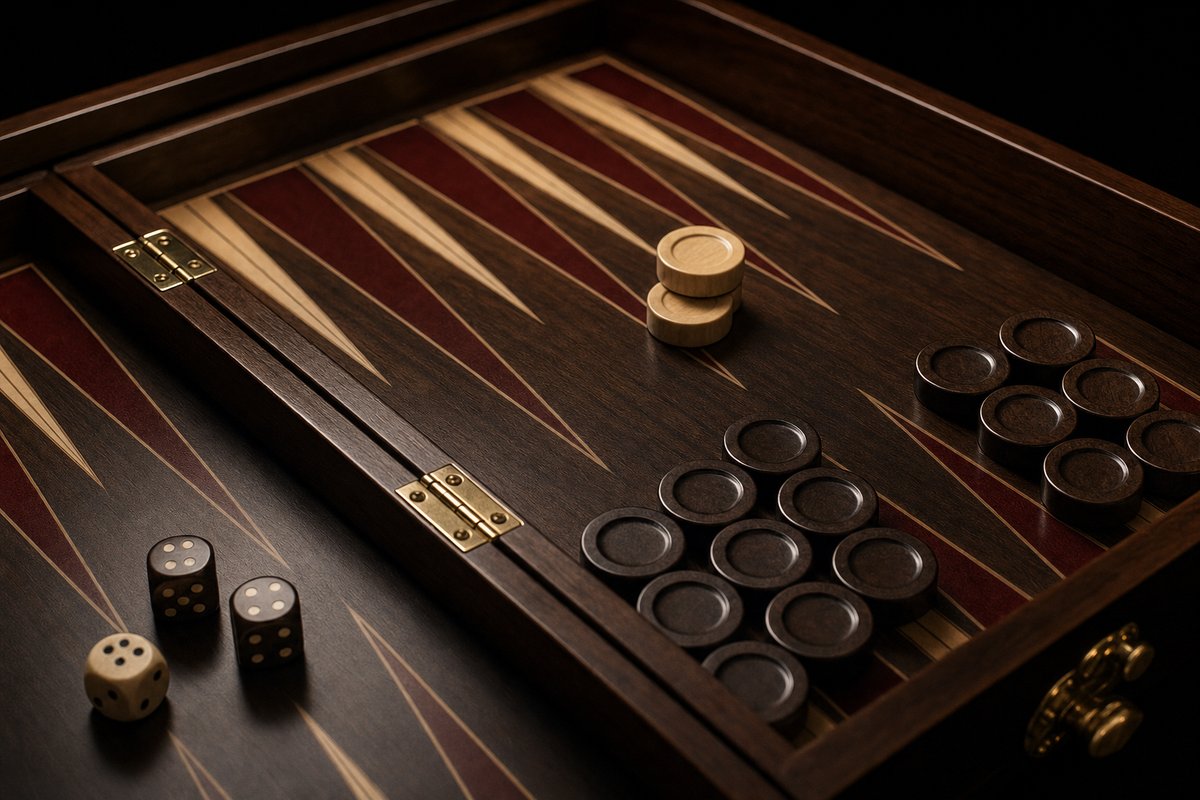
An anchor is a point held by two or more of your checkers inside your opponent's home board. It is the backbone of patient play: it cannot be hit, it gives your back checkers a safe home, and — crucially — it keeps you in range to hit your opponent as they try to bring their own checkers around and bear off. As long as you hold an anchor, you are never quite out of the game.
Where the anchor sits matters
Anchors come in two broad kinds, and the difference is large:
- Advanced anchors — the 20-point (the opponent's 5-point) and the 21-point. The 20-point is the golden anchor: it sits high in the opponent's home board, so you get direct shots at their checkers as they move home, while staying completely safe. An advanced anchor lets you play a relaxed holding game with little risk.
- Deep anchors — the 23-point and 24-point, down in the corner. These are safe too, but the shots come later and from further back, and a deep anchor often shades into a back game. They are a fallback, not a goal.
Given the choice, aim for the 20-point. Splitting your back checkers early — as several opening replies do — is often an attempt to make exactly that anchor.
How to play a holding game
The plan is simple to state and harder to do: hold the anchor, keep your structure, and wait. While you wait, you keep your own checkers tidy and flexible, you do not break points needlessly, and you watch your opponent's position for the moment they must leave a blot within range. Bringing your own spare checkers home in good order — without burying them on low points — keeps you ready to make a strong home board for when the shot comes.
The reason the anchor is so powerful is the shot you are waiting for. As your opponent bears their checkers in, there often comes a roll where they cannot play safely and must expose a checker as they pass your anchor. If you hit it then — late, with a strong home board behind you — that checker faces a long, dangerous journey back, and a game you were losing can flip in a single roll.
Timing and the home board
A holding game lives or dies on timing. The hit only wins if, when it lands, you have a home board ready to contain the checker you sent back. That means you want to keep your home-board points intact until the shot arrives — not be forced to break them early because you have run out of other moves. Hold too long with nothing to do and your position collapses; the art is in having useful moves to play while you wait.
Knowing when to leave
An anchor is a tool, not a marriage. The hardest judgement in a holding game is when to give it up and run. If you draw ahead in the race, or if holding any longer would force you to wreck your own board, the right move is often to break the anchor and head for home while you can still get there safely. A held anchor that costs you the race you were winning is a mistake; leaving at the right moment is a skill in itself.
Common questions
What is an anchor in backgammon?
An anchor is a point you hold with two or more checkers inside your opponent's home board. It is a safe base that cannot be hit, gives your back checkers somewhere to wait, and keeps your right to hit the opponent as they bring checkers home.
What is the golden anchor?
The 20-point — your opponent's 5-point — is called the golden anchor. It is the most valuable advanced anchor because it sits right in the opponent's home board, giving you direct shots at their checkers while staying safe yourself.
What is a holding game?
A holding game is a patient strategy built around keeping an anchor and waiting for a shot at an enemy blot, rather than racing. You hold your ground, stay ready to hit, and aim to turn a single hit late in the game into a win.
When should I give up an anchor?
Give up an anchor when staying costs you the race and no shot is likely — usually when you are ahead in the race and should simply run home, or when holding any longer would force you to break your home board. Leaving at the right moment is as skilful as holding.